You built the life. Can you let it be yours?
You already know how to build. You've built a business, a family, relationships, wealth, responsibility, a life.
The question is no longer whether you're capable of building it. The question is whether you can live inside what you have built.
You're one of its architects.
Not the only one.
Some of the architecture was inherited.
Some of the plans came from your parents. Some from the environments that shaped you. Some of the rooms were added around what other people needed. Some walls went up as protection. Some you kept because they worked.
You did not draw the whole plan before construction began.
You built it as you lived.
Most of it you built without realising. Every decision, accommodation, responsibility and relationship added something to the structure — and quietly answered questions you've never heard asked. Who carries the load and who decides. What has to be earned.
And the answers shape what can be received, and what happens when you stop. That is the experience. Which parts of you are welcome inside — and which parts you cast to live outside.
No one sat down and chose these. They were settled as you lived. And the structure kept the answers.
No one could show you the plans.
Not because they were hidden. The people who taught you were living by plans they had never seen either.
And from inside, under load, you don't go looking for plans. You look for whatever will keep the house standing today. Certainty never arrives empty-handed. It carries with it the narratives that reinforce the plans you hold inside.
The plans are behind the patterns.
The patterns show you where to look.
One person. One life.
Your roles may change from room to room. You do not become a separate human system in each one.
What happens at work travels home. What happens between you and your family affects the choices you make in business. The way you establish worth, exercise authority, receive love and carry responsibility travels everywhere with you.
When those environments require incompatible versions of you — or depend on you to compensate for the gaps between them — you become the load-bearing infrastructure.
Eventually, the whole life only works while you keep holding it together.
An integrated life is not a balanced life.
Balance assumes life is divided into separate parts — work, family, health, relationships, purpose — and that the answer is to distribute yourself more evenly between them.
It offers itself as the sensible middle. Hustle says choose: pour everything into one part and let the rest wait. A smaller life says retreat: fewer parts, less to hold. Balance says divide evenly — and looks like wisdom next to either.
But balance is not the opposite of hustle. It is the same move, evenly spread. All three answer the same question: your parts compete, so how will you ration yourself between them?
Balance can be the war conducted politely.
Hustle picks a winner. A smaller life surrenders territory. Balance negotiates the ceasefire. None of them question the war.
Perhaps imbalance is not the problem. Perhaps the problem is that the life has been designed so that its parts compete with one another in the first place.
Integration was never another option on that menu. It removes the conditions that make the parts compete.
The war dissolves.
Then we sold the business.
And everything stopped.
Suddenly I had everything and nothing at the same time.
I began questioning the purpose of life itself. Not from darkness. From somewhere much quieter.
The place you reach when you have almost everything you thought you were building towards, but every available future still feels like a trade-off.
I thought perhaps the answer was a smaller life.
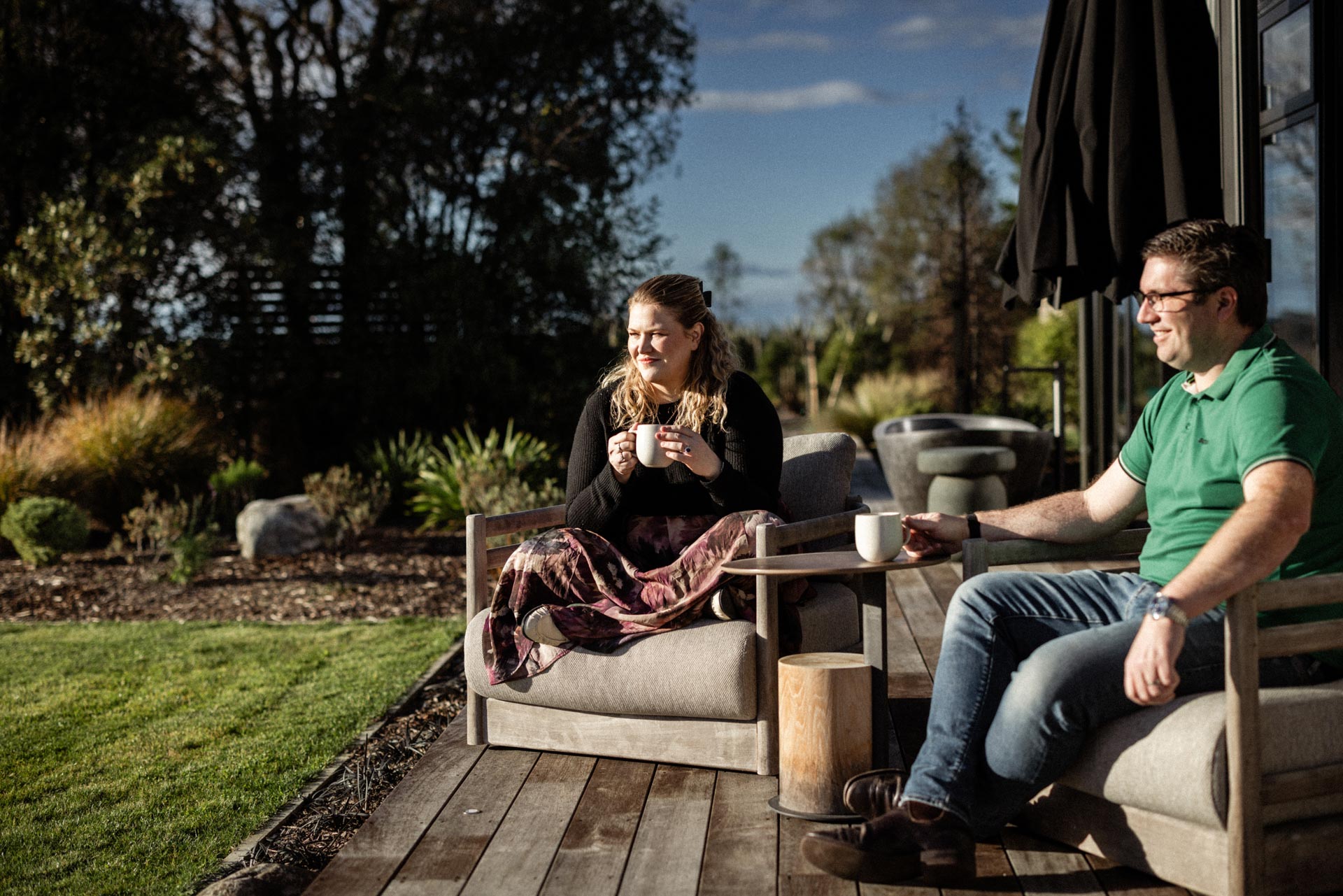
Ten cows. A vegetable garden. The children taking the bus to school. Chris and me at Whakahā — our place inland in the South Island — as housewife and house husband.
A life with more space. More beauty. More colour.
Except the thought of having my brain and not putting it fully to use felt worse. Would a smaller life really allow me to feel more alive if it required another essential part of me to disappear?
Peace or magnitude. A life I could feel, or a life large enough to use all of me.
We still haven't bought the cows.
Colour did not come from a smaller life.
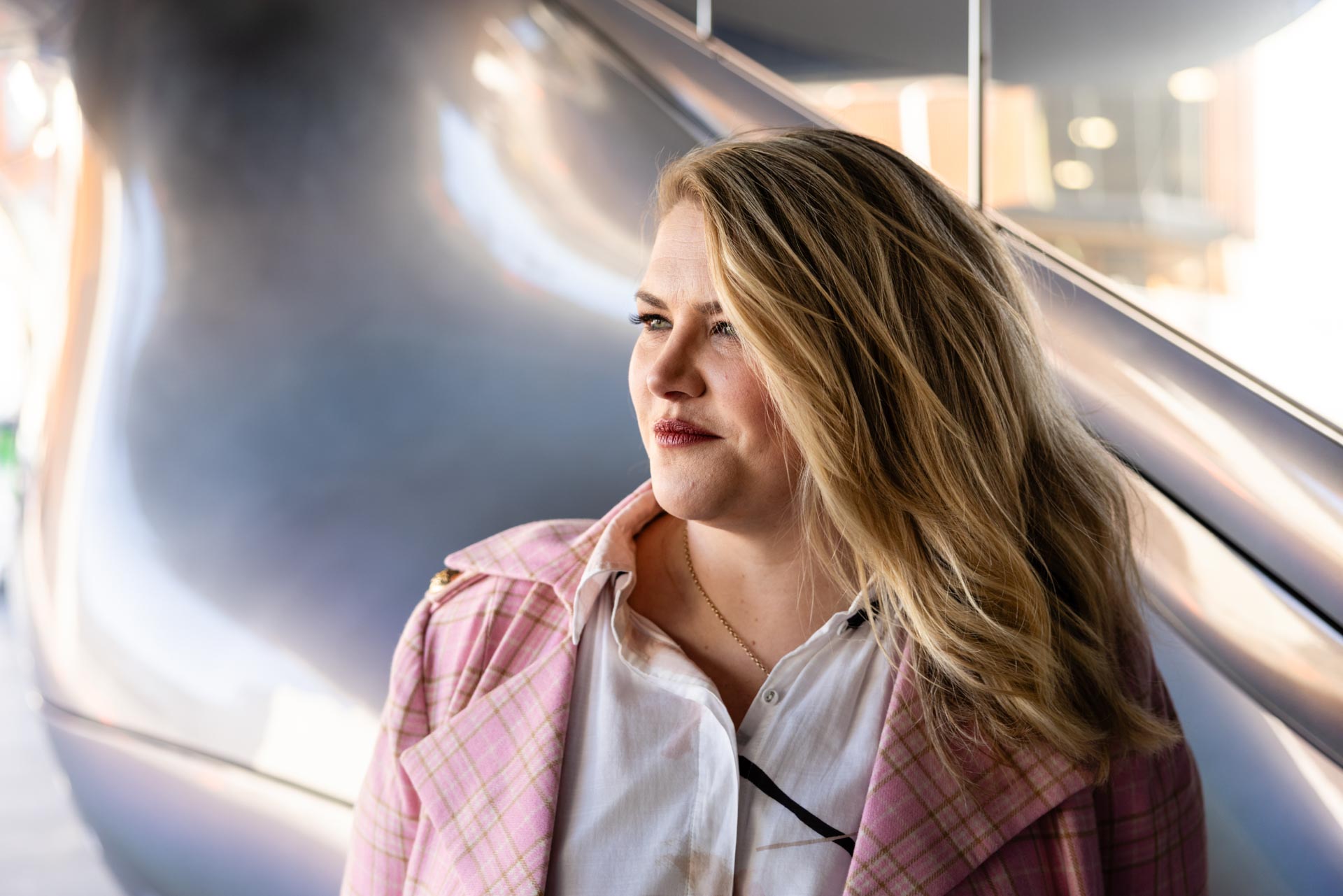
One morning. November 2024, I woke up and the world was in colour. I looked out the window and saw blue. Real blue. The sky with a single bird moving through it, and as I brought my gaze closer, the contrast of the bee. Black, yellow and black again. Its fuzzy stripes and wings moving in slow motion amongst the kaleidoscope of colour. The green — oh, I have never seen so much beauty. Trees. Flowers. Freedom.
I was six months pregnant at the time. Every day I was writing, exploring, observing and connecting. My mind was fully alive and in use. Nothing about the external shape of my life had become smaller. Nor larger.
The parts I had cast outside were beginning to come inside.
Four years of excavation went before that morning. Not a smaller life. Not a larger life. Integrating the parts of myself I had cast outside — the bright ones as much as the wounded ones — until I could exist in the fullness of who I am without compromising any part of me. Or so I thought.
And in that moment, nothing stood between reality and me. It conducted all the way through my experience.
The beauty had always been there.
I had become able to receive it.
Effort and discipline can build the life.
Coherence is whether it holds. Conduction lets you feel it.
To own the life is to let it be yours.
With all its beauty, authority, responsibility, weight, effects and consequences.
Not gratitude imposed over something that does not fit. Not entitlement to everything you desire. The ability to encounter the life accurately: without rejecting what is yours, without carrying what is not.
And receiving turns out to ask something of you. Beauty, pride, joy, glory and love can only land in a person who believes they are allowed to have them. The life outside can be complete while the architecture inside still says: not yet, not earned, not for you.
What it feels like is unremarkable.
Pride without immediately apologising for it. Joy without questioning whether it has been earned. Beauty without calculating how long it will last. Glory — basking in the magnificence of what you have created — without being consumed by it.
Decisions that need no rumination before them and carry no decider's remorse after them. Choosing the hard thing and losing nothing to regret. Being fully yourself in every room you enter.
Not an extraordinary state. An ordinary life without continual internal interruption.
The dishwasher runs. The children argue. Chris makes my morning coffee. I keep writing.
There is you.
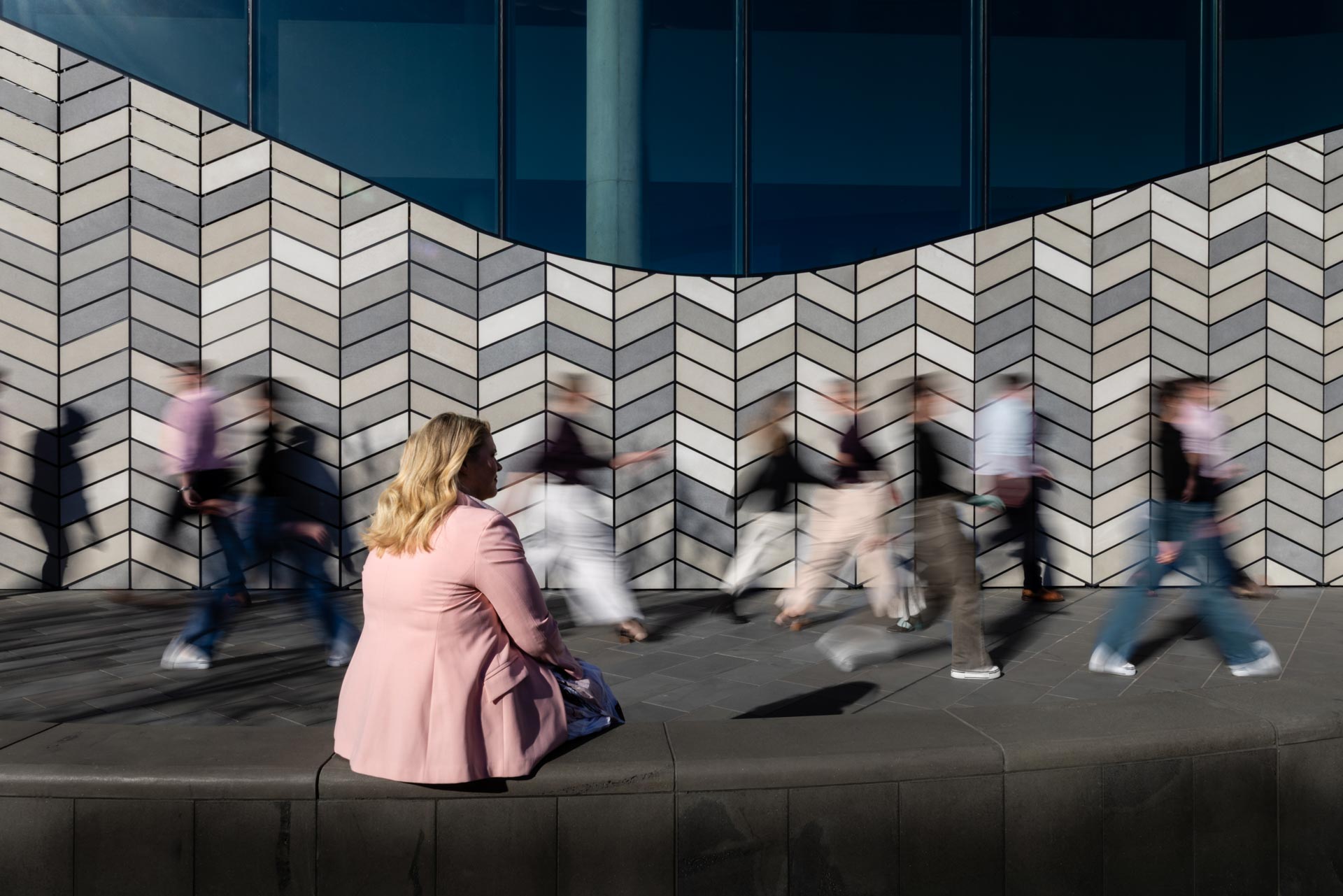
And there is reality.
There is what you desire, what matters to you and what you are willing to choose. And there are other people, existing conditions, material limits, time and consequences.
You can abandon yourself to what already exists. You can attempt to make reality conform to what you want. Or you can remain fully yourself and participate within what is true.
You already live with a third thing.
Two people, in all their difference, created something neither of them could have produced alone — and neither of them controls. You.
Between two people, a we forms that belongs to neither. In a family. In a business. In a community. Wherever you are.
The third thing is not a compromise between the two, and not a combination of them. It is what their relationship creates.
When you stop choosing between them.
Holding two truths at once — yours and reality's — is honest. Neither needs to resolve into the other. The third thing forms when both participate together.
The life I am living now is one. It is not the smaller life I imagined, and it is not the life I had built. It is what became possible between everything I am and everything that is real — something neither could have produced alone.
It was never on the menu.
Architecture is not destiny.
You can move the furniture. Paint the walls. Change businesses, relationships, houses or locations. Sometimes the external form genuinely needs to change.
But not smaller because smallness promises peace. Not larger because scale promises more. The size the life actually requires — which you can only read once you can see the plans.
If you cannot see them, you may rebuild the same architecture out of different materials. Everything changes. The plans come too.
Once the architecture becomes visible, you can distinguish what was inherited from what you have continued. What belongs to someone else from what is yours. What reality actually requires from what the current design is producing.
That is where you'll find your redesignable edge.