
Start with Self
There is no single path to becoming yourself. If there were, someone would have found it by now.
On integrity and conduction between the parts of dynamic systems.
By Camille Kathryn Hughes.
Updated 10 September 2026 | 7 minute read
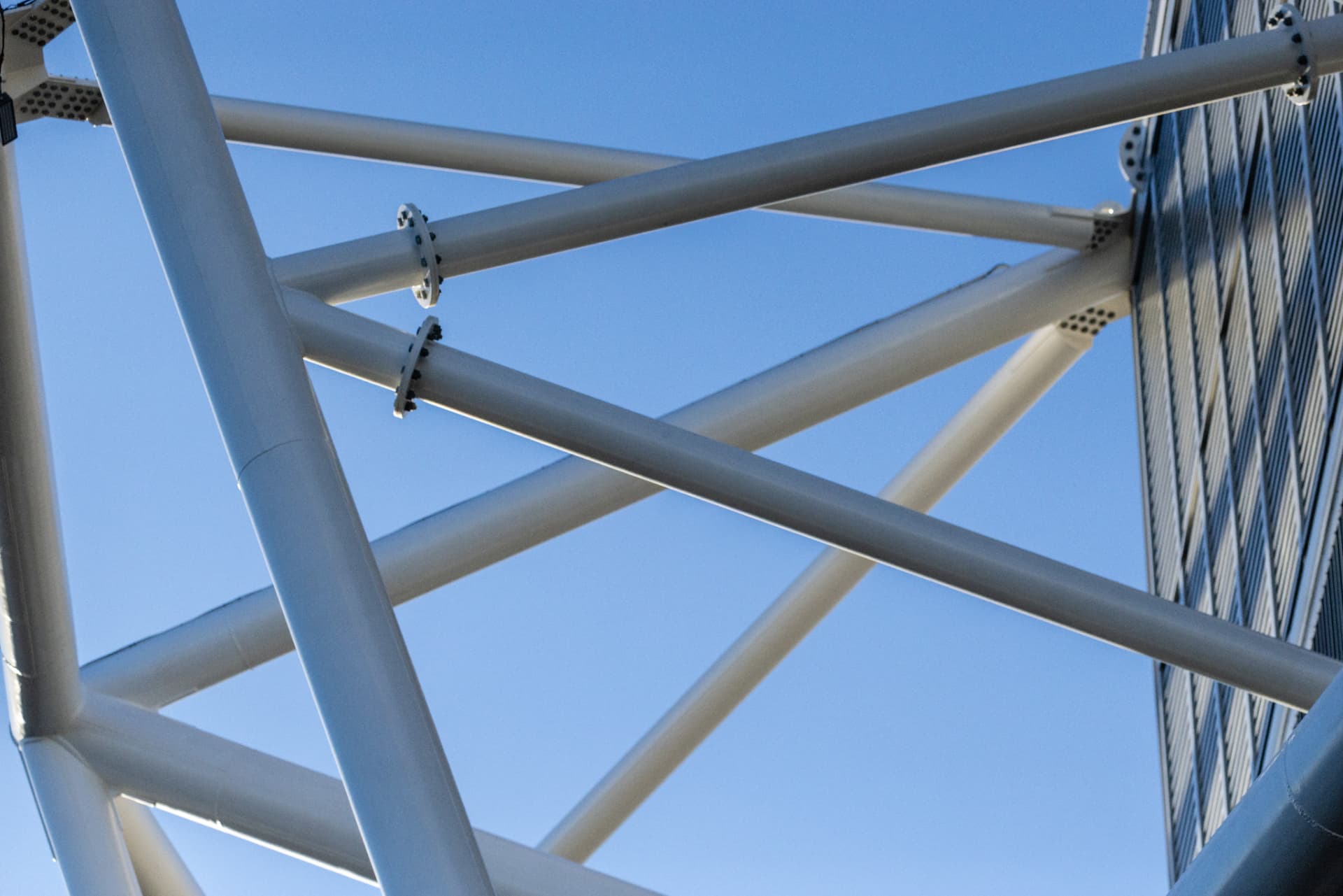
I think about integrity in the engineering sense: Can a structure or system carry what it was designed to hold?
Applied to a person, the question becomes: Can I carry what belongs to me? My decisions. My responsibilities. The consequences of my choices. The load created by what I choose to build, lead or continue. That matters. But the moment more than one part enters the system, individual integrity is no longer enough.
Two people can each have integrity and still create a relationship that does not. A team can be full of exceptionally capable people and still be dysfunctional. A board can contain brilliant directors and repeatedly make poor decisions. Every musician in an orchestra can know their part perfectly and still produce noise.
The integrity of the parts does not guarantee the integrity of the whole. Something has to happen between them. I call that conduction.
Static structures are relatively easy to imagine. A beam carries a load. A foundation transfers it into the ground. We can calculate whether each component is capable of carrying what has been assigned to it.
Human systems aren't static.
People move, information changes, decisions alter conditions. At the same time, relationships continually develop, someone learns and someone leaves. A child becomes an adult. A founder becomes a chair. A strategy changes. Something that belonged to one person yesterday belongs somewhere else today.
The architecture is continually being changed by the parts operating inside it.
People shape systems. Systems shape people.
So the integrity of a dynamic system cannot only exist within its parts. It must also exist between them.
That means asking different questions. Can information reach the person who needs it? Does decision authority sit with someone capable of carrying the consequences of the decision? Can responsibility move when authority moves? Can disagreement travel through a relationship without threatening the relationship itself? Can one person stop performing a function without another person silently absorbing it? Can the system self-recognise when the conditions have changed and recompose itself accordingly?
Those aren't questions about whether the individual parts are good enough.
They are questions about how well the relationships between the parts conduct.
I talk a lot about load. That can make it sound as though the objective is to eliminate it. It isn't.
A bridge without load isn't doing anything particularly useful. Neither is a person, relationship, team or business that has nothing to do. Responsibility creates load. Leadership creates load. Parenting, making decisions, building something worth continuing — it all creates load.
The question is where the load belongs.
When responsibility sits with someone who doesn't have the authority to act, load has been poorly attributed. When someone makes a decision but another person repeatedly absorbs its consequences, load has been displaced. When a team only functions because one person remembers the context, joins the dots, follows everyone up and catches everything that falls between roles, the team may appear functional. The structural weakness is being concealed by a human being.
The load itself isn't evidence of failure. Where it lands tells you something about its architecture.
I can bring integrity to my marriage. I can own my decisions, regulate my participation, communicate what is true for me and carry the consequences of my choices. My husband can do the same. But even two people with individual integrity do not automatically produce a relationship with integrity. Neither of us can perform both parts.
There is a third thing to attend to. Not me, not him — the we between us.
Can truth move between us? Can one of us change without requiring the other to remain unchanged? Can responsibility be correctly attributed? Can we disagree without making belonging conditional on agreement? Can we distinguish what is mine, what is his and what can only ever be ours?
That is conduction. The relationship has to be capable of carrying what passes between two changing people. The same thing happens when the duet becomes an ensemble.

Put six exceptional people around a table and you do not necessarily have an exceptional team. You have six exceptional people around a table.
Whether they become coherent depends on what happens between them. Perhaps everyone knows what they are responsible for, but nobody knows who can decide. Perhaps authority is clear, but information arrives too late or they don't know how to make a decision. Perhaps the strategy is understood differently by each function. Perhaps everyone is performing their role exactly as designed, but the roles themselves exist in silos.
Perhaps one highly capable person sees those gaps and quietly compensates for all of them. From the outside, the system works. Remove that person and suddenly it doesn't. That person wasn't merely participating in the system. They had become part of its infrastructure.
This is why developing capable people is not sufficient. You also have to design the relationships between their capabilities - so each can hold what is theirs, and between them conduct.
An orchestra makes this visible.
Individual mastery matters enormously. Every musician needs sufficient capability to play their instrument. But nobody would confuse twenty individually excellent musicians playing independently with an orchestra.
They have to participate in relation to one another. They listen, respond, adjust. Receive, transmit, enter, stop. Sometimes lead, sometimes follow. People play solos, duets, quartets. Each composition is not just the architecture recorded in the score. It is conducted, carefully, between them.
What any one musician does depends partly on what is happening elsewhere in the composition.
The music exists between the parts as much as within them.
That is what I mean by conduction. Not control, not management. Not one person becoming the central nervous system through which everything must pass.
Conduction is the capacity of the relationships within a system to allow what needs to move between its parts to move where it belongs.
Information. Authority. Responsibility. Resources. Consequences. Care. Signal. Decision. Learning.
The stronger the conduction, the less the system needs a person standing in the middle translating, compensating, reminding, reconciling and holding everything together.
This is where integrity becomes a question of continuity. People change, the founder eventually leaves, executives come and go. A child becomes an adult. The person who always knew how something worked is no longer there.
The All Blacks have been changing every part of themselves for more than a century. No one remains from the first team to wear the jersey, and yet the All Blacks are still the All Blacks. Watch them play and you can see why. The ball never stays in one pair of hands. It is passed before the tackle arrives, released to whoever is better placed — fifteen players, one ball, and the ball keeps moving to where it belongs. What continues is not any one player, nor the ball. It is both the composition of the team, and how the team conducts. The standard, the way the parts relate, what the jersey asks of whoever carries it. The players themselves call it custodianship. You carry the jersey for a time. You leave it in a better place.
A dynamic system with integrity cannot depend on its parts remaining exactly as they were. Nor can continuity mean preserving the existing composition indefinitely. The composition itself has to be capable of changing.
So I increasingly think about integrity at four levels.
Within the parts: Can each part carry what belongs to it? Can I carry what belongs to me?
Between the parts: Can the relationships conduct what needs to pass between them?
Within the whole: Do the parts and the relationships between them compose a structure capable of carrying what belongs to the whole?
Across time: Can both the parts and their relationships change without the whole losing what matters?
That last question is the one I keep returning to. Because eventually every system changes. The question isn't whether it will. The question is what its architecture and conditions require when it does.
Integrity lets each part carry what belongs to it. Conduction lets what needs to move between the parts move. Composition lets the whole carry what belongs to it. Continuity is what becomes possible when all three can change without requiring someone to hold the whole thing still.
The common answer to being over-loaded is resilience — toughen up, recover faster. But resilience is what you need after the load lands wrong. Integrity determines where it lands. And if what you are carrying is not yours, strength only makes the miscarrying sustainable.
Integrity develops through discernment and attribution — asking, of each thing you carry: Is this mine? Sorting finds two things, not one. Some of what you are carrying was never yours. Some of what is yours, you have let someone else hold. At first it is labour, one load at a time. Practised, it becomes the way you carry. You know what is yours when you pick it up. You know what is not, and you can put it down.
Conduction lives between the parts, so only the parts can develop it. A relationship learns to ask what needs to move and where it belongs. So can a team, a board, and indeed a family. But only together.
And it is loud. Somewhere in most systems is a person or persons quietly catching everything the architecture lets fall. The day they stop catching, the system finally shows where its gaps are. Balls drop. Friction registers. Every instinct says step back in and absorb the shock. But the noise is the parts learning to listen to one another, rather than through you. A system whose shocks are always absorbed never yields its data. The load has to be allowed to register where it actually lives. Where it lands is data, not verdict. That is how a design learns what it can carry.
None of it can be installed. It emerges — when each part carries what is theirs, and the between them learns to conduct. A system like that meets change the way musicians meet each other. Listening, adjusting, playing on.
That is continuity.
There is no single path to becoming yourself. If there were, someone would have found it by now.

No one becomes themselves alone. We discover who we are through participation.

Everything is changing. The question is not whether a system will change. The question is whether it can remain coherent as it does.