
Can what matters to you continue coherently?
Everything is changing. The question is not whether a system will change. The question is whether it can remain coherent as it does.

On understanding the mechanics doesn't give us the blueprint. It gives us a better basis from which to design.
By Camille Kathryn Hughes.
Updated 28 September 2026 | 2 minute read
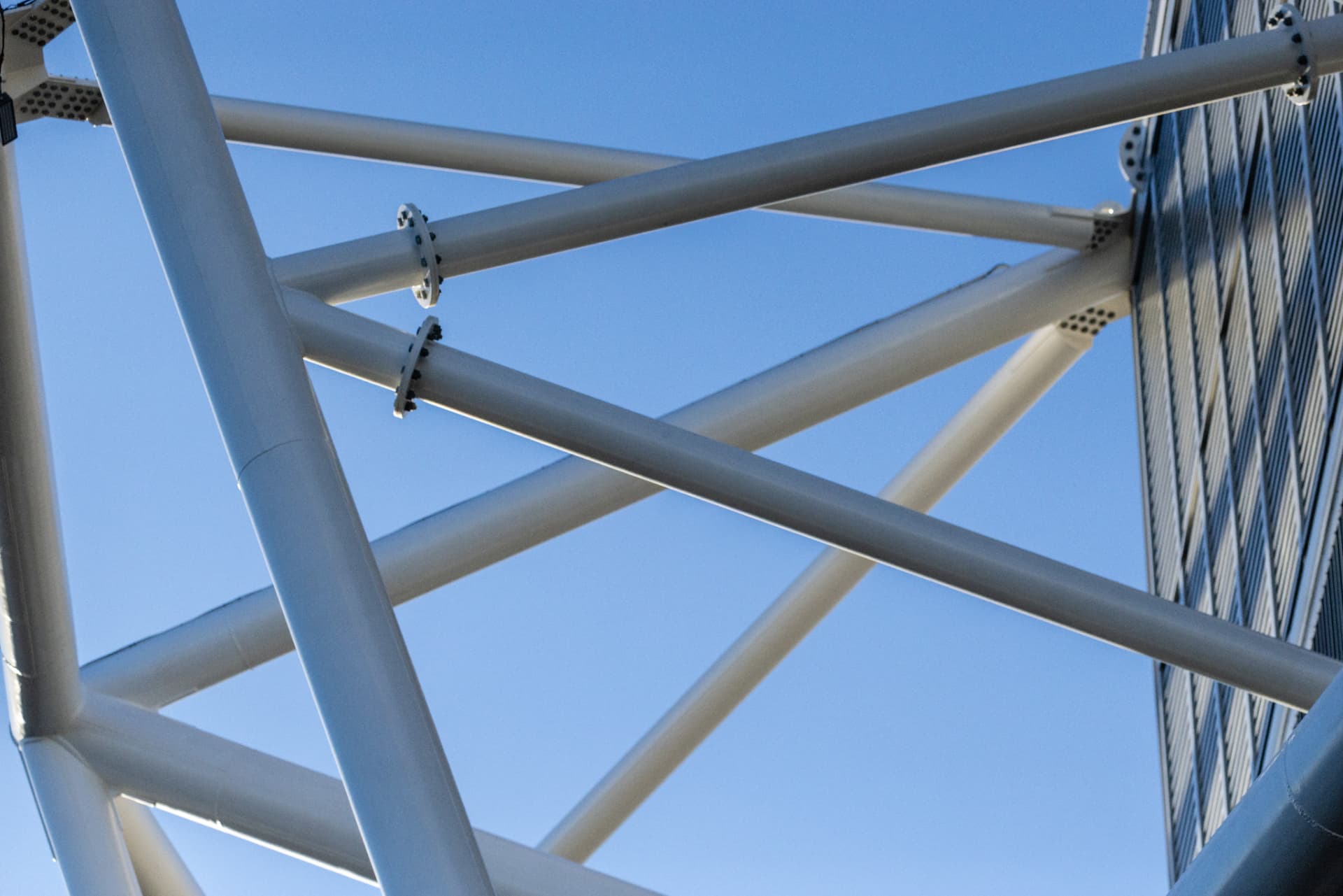
Its architecture still depends on what it needs to carry, the distance it needs to span, the materials available, the shape of the land, the environment it sits within and what needs to be able to travel across it.
I think human systems work much the same way, with one important difference. While bridges, buildings and human systems are all dynamic, human systems are vastly more complex because they are adaptive.
I've become increasingly interested in the distinction between mechanics and architecture, and how understanding those mechanics can inform the systems we design and operate and the effects they reliably produce over time.
The mechanics govern how the parts relate, how load moves, how responsibility and authority interact, how dependencies form, and ultimately how systems behave under pressure. And the mechanics governing these relationships and interdependencies recur across very different human systems in surprisingly similar ways.
But the architecture does not.
A person is not a family. A family is not a business. A business is not a country.
The parts of the systems are different. How those parts are arranged and relate to one another is different. Their histories, environments, constraints and desired outcomes are different too.
The mechanics recur. Each system's underlying architecture is particular.
Which is why there can be no universal blueprint. We cannot expect all systems within a category to take the shape of another.
Understanding the mechanics doesn't tell us what a structurally sound human system should look like any more than understanding gravity tells us what a bridge should look like.
But it can inform how we design and operate them.
And perhaps more importantly, it can help us look at an effect we're already experiencing and ask: What architecture is producing this?
Because the way we design and operate the systems we are responsible for is consequential. Every structure creates conditions. Every arrangement of parts changes what can conduct between them, where load lands, what becomes easier or harder, and what the people within the system are required to carry.
Understanding the mechanics doesn't give us the blueprint. But it does give us a better basis from which to govern how we design and operate the systems we are responsible for.
Everything is changing. The question is not whether a system will change. The question is whether it can remain coherent as it does.
Resilience is what you need after the load lands wrong. This is about what determines where it lands.